
Can a Paralegal Help With Council Housing Problems? Housing Paralegal Services Explained

A council housing decision can feel wrong in a very practical way. A banding decision may not match the medical evidence. A homelessness review may seem to ignore how stairs affect daily life. Temporary accommodation may be so difficult to manage that getting through the day becomes the problem.
In those situations, a paralegal can often help by making the issue clearer, organising the evidence, checking the relevant housing rules, and preparing written representations. That support is not the same as court representation or regulated litigation services, but it can be useful where a council, housing department, or reviewing officer needs a focused explanation of why a decision should be looked at again.
This article explains how housing paralegal services can help with council housing banding, section 202 reviews, and housing complaints in England. It is general information, not legal advice on any individual case.

What housing problems can H.A. Law Advisory’s housing paralegal services help with?
Council housing issues often sit on different legal or complaint routes. Choosing the right route matters because each one has its own purpose, deadline, and type of argument.
Common issues include council housing banding review help, section 202 review help, and unsuitable temporary accommodation. These phrases can overlap in real life, but they are not the same process.
Banding reviews look at priority on the housing register
A banding review is usually about the council’s allocation scheme. Councils in England must have an allocation scheme that explains how they prioritise applicants for social housing. The legal framework sits under Part 6 of the Housing Act 1996, including section 166A, and councils must publish their own scheme.
A banding issue may arise where:
Medical evidence appears to have been overlooked.
The household has been placed in a lower band than expected.
The council says the applicant has no housing need.
A change in circumstances has not been reflected.
The decision letter gives little explanation.
The key question is usually whether the council applied its own allocation scheme correctly and considered the relevant evidence. A paralegal can help identify what the scheme says, what evidence was before the council, and what needs to be explained more clearly.
Section 202 reviews deal with homelessness decisions
A section 202 review is a specific review under the homelessness provisions of the Housing Act 1996. It can apply to certain homelessness decisions, including decisions about suitability of accommodation or the council’s duties.
For example, a person may seek a review if the council decides that temporary accommodation is suitable, but the accommodation is difficult to access because of mobility problems, distance from essential care, or other relevant circumstances.
Section 202 reviews have strict time limits. The usual deadline for requesting a review is 21 days from being notified of the decision, although there can be arguments about late requests in some circumstances. The safest approach is to act quickly.
A paralegal can help prepare written representations for the review, but the route is more formal than a general complaint. The reviewing officer must consider the legal tests, the evidence, and the council’s duties under homelessness law and guidance.
Housing complaints deal with service failure
A housing complaint is different from a legal review. It usually focuses on poor service rather than whether a formal housing decision was legally or factually wrong.
A complaint may be suitable where there has been:
Delay in responding.
Failure to explain a decision.
Lost documents.
Poor communication.
Repeated failure to deal with reported issues.
Confusion about what stage the case has reached.
Complaints can go through the council’s complaints process. Depending on the landlord and issue, escalation may involve the Housing Ombudsman or the Local Government and Social Care Ombudsman. A complaint can sometimes lead to an apology, service action, compensation, or a fresh look at a matter. It is not always the right route for changing a formal decision.
That distinction matters. If the real issue is a homelessness suitability decision, a section 202 review may be needed. If the issue is priority on the housing register, a banding review may be the right route. If the problem is delay or poor handling, a complaint may be more appropriate.

What does housing paralegal support actually involve?
A common question is, “Am I just paying for a letter?”
A good written representation is more than a letter. It is the end product of reading the decision, sorting the evidence, checking the rules, and turning a broad concern into a clear argument. The value sits in the preparation as much as the wording.
The decision has to be read closely
The first step is to understand what the council actually decided.
That means checking:
What decision was made.
The date of the decision.
The reasons given.
The review or complaint rights.
The deadline.
The evidence mentioned in the letter.
Any evidence that appears to be missing.
A decision letter may look short, but the wording can reveal the council’s position. For example, the council may accept that a person has a medical condition but say the current accommodation does not make it worse. That needs a different response from a decision that says no medical evidence was provided.
Evidence has to be organised, not just attached
Housing departments often receive large bundles of documents. Sending everything without explanation can make the key point harder to see.
Paralegal support can involve sorting evidence into a clear order, such as:
Medical letters.
Occupational therapy reports.
Care plans.
School information.
Photographs of access issues.
Emails with the council.
Previous decisions.
Evidence of daily impact.
The point is to show why each document matters. A GP letter that says someone has knee pain may help, but an occupational therapy assessment explaining difficulty with stairs may be more relevant to a case about upper-floor accommodation.
The relevant rules have to be checked
Housing decisions are not based only on sympathy or hardship. Councils must apply legal duties, statutory guidance, and their own published policies.
Useful sources can include:
The council’s allocation scheme.
The council’s homelessness policy.
Section 166A of the Housing Act 1996.
Section 202 of the Housing Act 1996.
The Local Government and Social Care Ombudsman complaints process.
Checking the rules helps keep the argument focused. A representation that says “this is unfair” may be understandable, but a stronger representation explains which rule was applied incorrectly, which evidence was not considered, or why the conclusion does not follow from the facts.
Written representations turn evidence into an argument
Written representations should do more than repeat distressing circumstances. They should connect the facts to the decision that needs to be changed.
A focused representation will usually:
Identify the decision being challenged.
Set out the deadline and review route.
Summarise the household’s relevant circumstances.
Refer to the council’s policy or legal test.
Pinpoint what was missed or misunderstood.
Explain the practical impact.
Refer to specific evidence.
State the outcome sought.
This is where paralegal support can be most useful. Many people know what is wrong with the decision, but find it hard to present the issue in the way the council must answer.
A strong representation makes it easier for the decision-maker to see the link between the evidence, the rule, and the outcome requested.
A fictional example shows how evidence becomes a focused argument
The following example is fictional. It does not predict the outcome of any real case.
A council places an applicant in Band C. The applicant lives on the second floor with no lift. They have arthritis and use a walking stick. The decision letter says the medical evidence has been considered, but the current accommodation is not considered unsuitable and no higher priority is awarded.
The applicant has several documents:
A GP letter confirming arthritis.
A physiotherapy note about reduced mobility.
Photographs of the stairs.
A diary showing missed appointments after flare-ups.
An email to the council explaining pain after using the stairs.
A weak challenge might say:
“I cannot manage the stairs and need a higher band. Please reconsider.”
That may be genuine, but it leaves too much work for the council to do.
A more focused representation would make the argument step by step:
The decision accepts there is a medical condition, but does not explain how the stair access was assessed.
The council’s allocation scheme gives medical priority where accommodation has a significant adverse effect on health or mobility.
The evidence is not only a diagnosis. It shows a functional problem with accessing a second-floor home.
The physiotherapy note and daily impact evidence support the claim that stairs worsen mobility and restrict leaving the property.
The review should consider whether the current band reflects the medical impact of the accommodation, not just the existence of arthritis.
The requested outcome is a higher medical priority, or a fresh assessment with reasons addressing the stair access evidence.
That does not guarantee success. Councils may still decide the threshold is not met. But the representation gives the reviewing officer a clear issue to answer. It also creates a clearer record if the decision remains negative and further advice is needed.

What should be prepared before seeking help?
Preparing the right documents early saves time, especially where a review deadline is close.
Before asking for help, gather:
The decision letter
Include every page, not just the first page.
The date it was received
Deadlines often run from notification or receipt, so the date matters.
Relevant correspondence
Include emails, online portal messages, complaint replies, and letters.
Supporting evidence
This may include medical letters, occupational therapy reports, care evidence, school letters, photographs, or proof of travel and access problems.
The outcome sought
Be clear about what is being requested, such as a higher band, a finding that temporary accommodation is unsuitable, a fresh decision, or a complaint remedy.
It also helps to write a short timeline. This does not need to be polished. A simple date-by-date list can show when evidence was sent, when the council replied, and when the problem worsened.
When might a solicitor or barrister be needed?
Paralegal support has boundaries. H.A. Law Advisory can assist with reviewing papers, organising evidence, research, drafting, and preparing written representations within the scope agreed.
Some situations may need a solicitor or barrister, especially where the case involves:
Urgent court action.
A County Court appeal after a Section 202 review decision, often referred to as a Section 204 appeal.
Judicial review.
Possession proceedings.
Complex public law issues.
Representation in a reserved court hearing.
Legal aid eligibility questions.
Reserved legal activities are regulated under the Legal Services Act 2007. A paralegal service must stay within its permitted scope and should not present itself as a substitute for a regulated solicitor where regulated work is required.
Where a matter falls outside scope, H.A. Law Advisory can explain that limitation and, where appropriate, suggest referral to a solicitor, barrister, law centre, advice agency, or another suitable provider. Any case-specific decision about referral should be based on the documents, urgency, and type of legal remedy needed.
How do you get started and what does it cost?
The starting point is usually a short discovery call or initial review. The purpose is to identify the route, check any deadline, and decide whether paralegal support is suitable.
H.A. Law Advisory confirms fees before paid work starts. The fee should be clear in writing and should explain:
What work is included.
What documents will be reviewed.
Whether written representations are included.
The deadline for draft or final work.
What is outside scope.
Whether referral to a solicitor or barrister may be needed.
This matters because housing cases can vary. A short complaint about delay is different from a section 202 review involving medical evidence, suitability, care needs, and a tight deadline. The cost should reflect the actual work required, not a vague promise to “write a letter”.
To start, prepare the decision letter, the date received, and the best evidence available. Then visit H.A. Law Advisory’s housing page and book a discovery call.
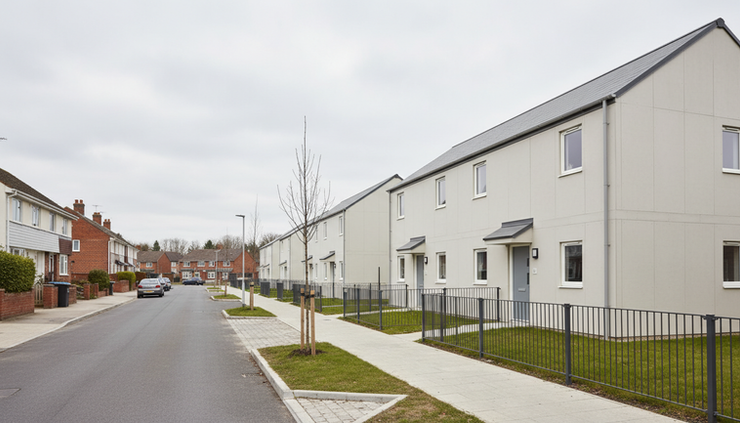
Useful sources for checking housing decisions
The most reliable housing arguments usually start with the decision letter, the council’s own policy, and official guidance.
Helpful sources include:
Housing Act 1996, section 166A, which covers allocation schemes.
Housing Act 1996, section 202, which covers reviews of certain homelessness decisions.
Homelessness Code of Guidance for Local Authorities, which councils must have regard to when carrying out homelessness functions.
Housing Ombudsman complaints information, for complaints about social landlords within its scheme.
Local Government and Social Care Ombudsman complaint guidance, for complaints about councils and some other bodies.
A paralegal cannot guarantee that a council will change its decision. What a paralegal can do is help present the issue in a clearer, more structured way, with the evidence and rules connected to the outcome being requested. For many housing problems, that clarity is the difference between a general complaint and a review that the decision-maker can properly answer.


Comments